The Hidden Cost of Broken Hiring — And How AI Startups Are Fixing It
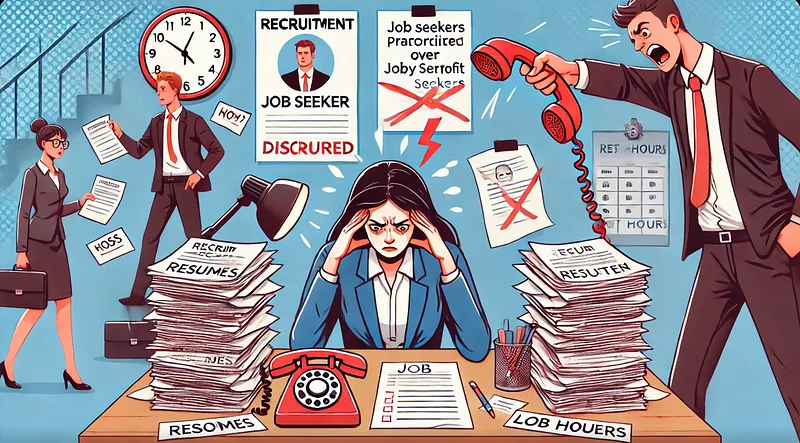

Every year, companies spend billions of dollars trying to hire the right people — and still get it wrong. The average corporate job opening receives hundreds of applications, most of which a human recruiter will never fully read. This isn’t a minor inefficiency; it’s a systemic problem that costs businesses time, money, and talent. This is exactly the kind of problem a new wave of AI startups has decided to tackle head-on.
The Real Problem: Hiring Is Broken at Scale
Recruiting today suffers from a few specific, measurable pain points:
Resume overload: Popular job postings can attract 500+ applications within days, far more than any human team can properly screen.
Bias and inconsistency: Two recruiters reviewing the same resume often reach different conclusions, leading to inconsistent, sometimes unfair, decisions.
Slow time-to-hire: The average hiring process stretches over weeks, causing companies to lose strong candidates to faster-moving competitors.
Poor candidate experience: Applicants frequently submit resumes into a black hole, never hearing back — damaging a company’s reputation in the process.
These aren’t abstract inconveniences. Lost time and bad hires directly hurt revenue, team morale, and growth.

The Solution: AI-Native Recruiting Startups
A growing category of AI startups has built products specifically designed around this problem. Instead of treating AI as a small add-on feature, these companies put AI at the core of the hiring workflow:
Automated resume screening — Machine learning models parse thousands of resumes in minutes, ranking candidates against the actual requirements of a role rather than just keyword matches.
Structured interview analysis — Some tools use natural language processing to evaluate interview transcripts for skill signals, reducing the influence of unconscious bias.
Conversational AI screening agents — Instead of a static form, candidates now interact with an AI assistant that asks follow-up questions, clarifies experience, and creates a much richer profile than a resume alone.
Predictive fit scoring — By analyzing patterns from past successful hires, some platforms predict how likely a candidate is to succeed and stay long-term in a specific role.
The result: companies using these tools report cutting screening time from weeks to days, while candidates get faster responses and more transparent feedback.

Why This Matters Beyond Hiring
The hiring problem is a good example of a broader pattern in successful AI startups: they don’t try to “add AI” to everything. They pick one expensive, well-defined, high-friction problem and solve it end-to-end. That focus — a real problem, backed by a measurable solution — is usually the difference between a startup that raises funding and grows, and one that quietly disappears.
The Hidden Cost of Broken Hiring — And How AI Startups Are Fixing It was originally published in StartupInsider on Medium, where people are continuing the conversation by highlighting and responding to this story.
Explore my technical writing services and research samples or learn more about Soumi Ganguly.