AI Agents: The Shift From Chatbots to Autonomous Digital Workers

Introduction
Over the past couple of years, the word attached most often to “AI” has been “agent.” In 2023–24, most of us were simply asking chatbots questions and getting answers back. By 2026, those same underlying models are doing real work — reading emails and replying to them, writing and testing code, gathering research from multiple sources into a report, and even opening a browser to fill out forms.
This shift didn’t happen overnight. It’s the result of a steady progression: from large language models, to models that can use tools, to today’s agents that can carry out multi-step tasks on their own. In this article, we’ll look in detail at what an AI agent actually is, how it works, where it’s being used in the real world, and the risks that come with it.
Chatbot vs. Agent: What’s the Difference
A regular chatbot is essentially a question-and-answer machine. You ask something, it answers, and the exchange ends there. It doesn’t make decisions on its own, open files, or run tools.
An AI agent differs in three key ways:
Goal-driven work: You give it a goal (“clean up this spreadsheet and build a chart from it”), and the agent figures out the steps needed to get there.
Tool use: An agent can run code, search the web, read and write files, and even talk to other software.
Multi-step planning and memory: An agent can pause partway through a task, look at the results so far, and decide what to do next — in short, it thinks as it goes.
Put simply: a chatbot is an advisor, while an agent is an assistant that actually does the work.
How an AI Agent Actually Works
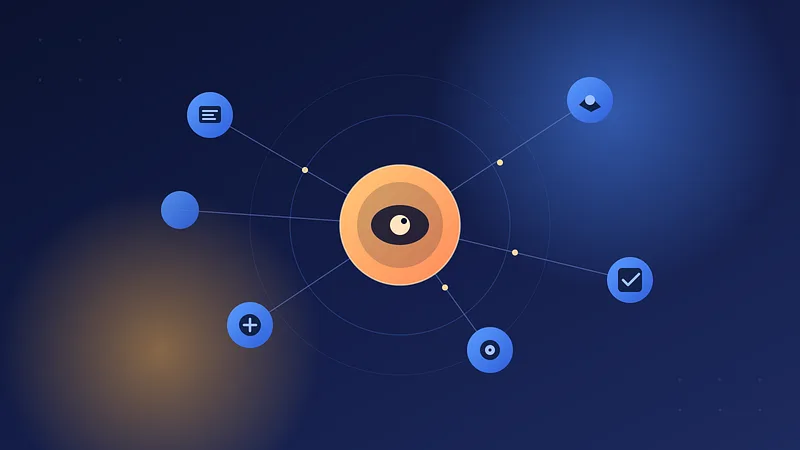
Most modern agents follow a simple loop: Perceive → Plan → Act → Review.

Here’s how that loop plays out:
Perceive: The agent first takes stock of what it has in front of it — a file, an email, a webpage, or an instruction from the user.
Plan: It then figures out what steps are needed to complete the task. For complex jobs, the agent breaks things down into smaller sub-tasks.
Act: Following its plan, the agent does the actual work — running code, searching, editing a file, or calling another tool or API.
Review: The agent checks whether the outcome looks right, and if not, loops back to an earlier step.
At the center of this entire loop sits human oversight. Well-designed agent systems are built so that a person has to approve any high-stakes or risky step — sending money, sending an email, deleting a file — before it happens. That’s the real difference between a responsible AI agent and a risky “black box” automation.
Where AI Agents Are Being Used Today
By 2026, AI agents have moved well past the experimental stage. In several areas, they’re now part of everyday work:
Coding agents: Developers now have agents write entire features, hunt down and fix bugs, and even refactor old codebases — with humans acting as reviewers rather than writing every line themselves.
Research and information gathering: Journalists, analysts, and students use agents to pull information from multiple sources and turn it into a concise report.
Customer support: Many companies now use agents that read a customer’s complaint, find the relevant information, and — within set limits — even complete actions like cancelling an order or issuing a refund.
Everyday office work: Writing meeting notes, sorting email, cleaning up spreadsheets, and coordinating calendars are increasingly handled by agent-based tools.
Robotics and physical AI: In warehouses, factories, and farms, AI agents are now directing robots to complete real-world tasks.
Across all of these, the most successful deployments aren’t “automation with no human in it” — they’re automation with a human in the loop. Starting with small, low-risk tasks, checking the results, and gradually extending trust to the agent has proven to be the most effective approach so far.
Risks and Challenges
As AI agents grow more capable, the risks grow with them. A few key challenges stand out:
Errors and hallucination: An agent can occasionally treat incorrect information as fact and act on it — which is more damaging than a chatbot’s mistake, because an agent doesn’t just say the wrong thing, it can do the wrong thing.
Data security and privacy: The more files, emails, or system access an agent is given, the greater the risk of sensitive data leaking. This is why following a “least privilege” principle — giving an agent only the access it strictly needs — matters.
Accountability: If an agent makes a bad call and causes harm, who’s responsible — the user, the company, or the model maker? Legally and ethically, this question doesn’t yet have a fully settled answer.
Over-reliance: Leaning on agents more than necessary risks eroding people’s own skills and decision-making ability over time.
This is exactly why responsible-AI advocates keep repeating the same point: final control over money, contracts, personal relationships, and safety-critical decisions should stay with a human. An agent is meant to be an assistant here, not a replacement.
Where This Is Headed
A few trends are becoming clear for the next few years of AI agents:
Multimodal agents: Agents that can understand and generate across text, images, audio, and video all at once.
Specialized agents: Instead of one “super agent” good at everything, demand is growing for agents trained specifically for fields like law, medicine, or accounting.
Agent-to-agent communication: Technology that lets multiple agents divide up and collaborate on complex tasks is advancing.
Stronger monitoring systems: Companies are building better logging of every agent action, audit trails, and mandatory human approval steps where needed.
Conclusion
AI agents are bringing one of the biggest shifts technology has seen — the move from chatbot to genuine “digital coworker.” But with that power comes an equal amount of responsibility. For anyone using or building this technology, the key takeaway is probably this: let the agent do the work, but keep the final decision in your own hands.

However far the technology advances, judgment, values, and accountability should ultimately stay in human hands.
Before you go
Please take a moment to like the post and follow the writer!
Did you know that over 400,000 developers share what they’re building, learning, and discovering across our platforms every month? Learn how you can contribute here
AI Agents: The Shift From Chatbots to Autonomous Digital Workers was originally published in Artificial Intelligence in Plain English on Medium, where people are continuing the conversation by highlighting and responding to this story.
Explore my technical writing services and research samples or learn more about Soumi Ganguly.